Rod of Asclepius: An Educational RPG - Dev Log #1

News / 10 July 2025

Dev Log #1 – Why I’m Making a Roman RPG

10-July-2025

The vision behind Rod of Asclepius

I believe that creating a historically grounded, educational Roman RPG is not only possible; it’s necessary.

With Rod of Asclepius, I set out to explore a lesser-seen side of Roman life. This first dev log shares why I started this project, and why I believe games can do more than entertain.

More Than War: Stories from the Edge of Empire

Most Roman-themed games focus on legions, conquest, and imperial politics. But the Roman world was full of ordinary people facing extraordinary challenges.

Life in the late Empire brought spiritual doubts, medical crises, and slow societal collapse. These stories deserve to be told; and games are an ideal medium for them.

In Rod of Asclepius, I’ve recreated Roman forts and settlements based on real archaeological findings from Pannonia (modern-day Croatia, near the Danube). I also rebuilt a Roman grave monument—the Lobor stele—and released it as a cinematic short.

This is not a game about war. It’s about healing, knowledge, and survival in the shadow of fading power.

Learning Through Play, Not Preaching

Rod of Asclepius teaches through systems; not lectures.

The gameplay revolves around Roman medical practice: herbal treatments, surgical tools, and healing rituals based on historical texts. Players gather herbs, uncover lost scrolls, and make tough choices while treating the wounded and caring for the dying.

A card-based mechanic lets you apply real ancient remedies. A branching journal system tracks discoveries. Dialogue trees reveal myth, medicine, and meaning through interaction; not exposition.

The result is an RPG where learning feels like play, not school.

A Solo Project, with Shared Roots

While I’m developing this game alone, I’ve had generous support from historians, archaeologists, Latin language experts, artists, and volunteers. Their insights help ensure the game respects both accuracy and cultural heritage.

Games can preserve memory. They can invite us into forgotten worlds; and help us make sense of our own.

Rod of Asclepius is my contribution to that vision: A Roman RPG about healing instead of conquest, and discovery instead of domination.

If that speaks to you, I’d be honored if you wishlist the game on Steam and follow the project as it grows.
Play Rod of Asclepius Demo

Report

Rod of Asclepius: An Educational RPG - Dev Log #4

News / 13 February 2026

Dev Log #4 — Latest Update

13-Feb-2026

Rendering pipeline moved to Vulkan (Godot Forward+)

I switched the project’s rendering pipeline to Vulkan / Forward+. This is a major technical step that improves the foundation for lighting, materials, and future visuals; and it also changes how the game interacts with different GPUs/drivers.

If anything looks “off” after this update (lighting, shadows, shimmering, strange dark surfaces), please tell me:

  • your GPU model (NVIDIA/AMD/Intel)
  • OS
  • and whether you’re on the latest drivers

Boot & stability improvements

  • Fixed a freeze at 96% loading and improved overall boot scene stability.
  • Hardened scene transition logic to prevent rare crashes, “previously valid object” errors, and repeated transition triggers.
  • Added safer checks around world-map teardown and general transition cleanup.

Medical system: expanded and strengthened

Hospital case dialogue coverage

  • Added hospital case dialogue data for all illnesses, aligned with the existing medical missions and mechanics.

Permanent treatment crafting + deck system

  • Added permanent medical card crafting and a persistent deck system.
  • New Card Deck Crafting menu (via Character Design Menu).
  • Treatments can unlock permanently and track in save data.
  • Treatment cards now show attribute bonuses (INT/DEX/CHA) and improved visual overlays.
  • Ingredient consumption + auto-unlocking for basic treatments are integrated into the loop.

Treatment flow polish

  • Added card cycling, better deck handling, and more reliable bonus display refresh.
  • Streamlined treatment bonus calculations and removed redundant ingredient/inventory checks where they weren’t needed.

Time & UI

  • Replaced the old Date and Time Panel with a cleaner Advance Time Panel.
  • Improved day advancement and time progression control.
  • Added a fog overlay + improved visibility logic (including a hint when advancement isn’t allowed).
  • Added a subtle sun-turning hint to make “time moving” feel more readable.

Also:

  • Improved inventory list interactions and overall UI layout consistency.

Controls & input (Steam Input + prompts)

Input (new)

  • UI prompts now reflect whether you’re using keyboard/mouse or a controller.

Steam Input + Xbox layout

  • Implemented Steam Input support for broader controller compatibility.
  • Added Xbox 360 mappings and action manifests.
  • Improved controller hot-plug handling (connect/disconnect messaging and action updates).

Unified input handling

  • Refactored controller handling so Steam controllers and standard Godot inputs behave consistently.
  • Improved JoyCursor and input-dependent UI scripts to use unified action checks.

Cursor & UI feedback polish

  • Dialogue panels now include a dynamic “Next / Exit” hint that matches your current input device.

Guards: new follower controls

  • Follow / Stay toggle
  • Heal action
  • Dismiss action

Also included:

  • A dedicated Stay state (idle + threat behavior)
  • Smoother transitions when teleporting to the player across scenes
  • Cleaner popup positioning logic

Player character visuals & animation

  • Added a young/old look for the player character (including hair changes that reflect the story).
  • Cleaned up player-related nodes/scripts and updated scene configurations for consistency.

World & environment art updates (Demo/Prologue scope)

  • Added a new Oak tree prefab (mesh + material).
  • Added an optimized Ash tree prefab (new mesh + texture).
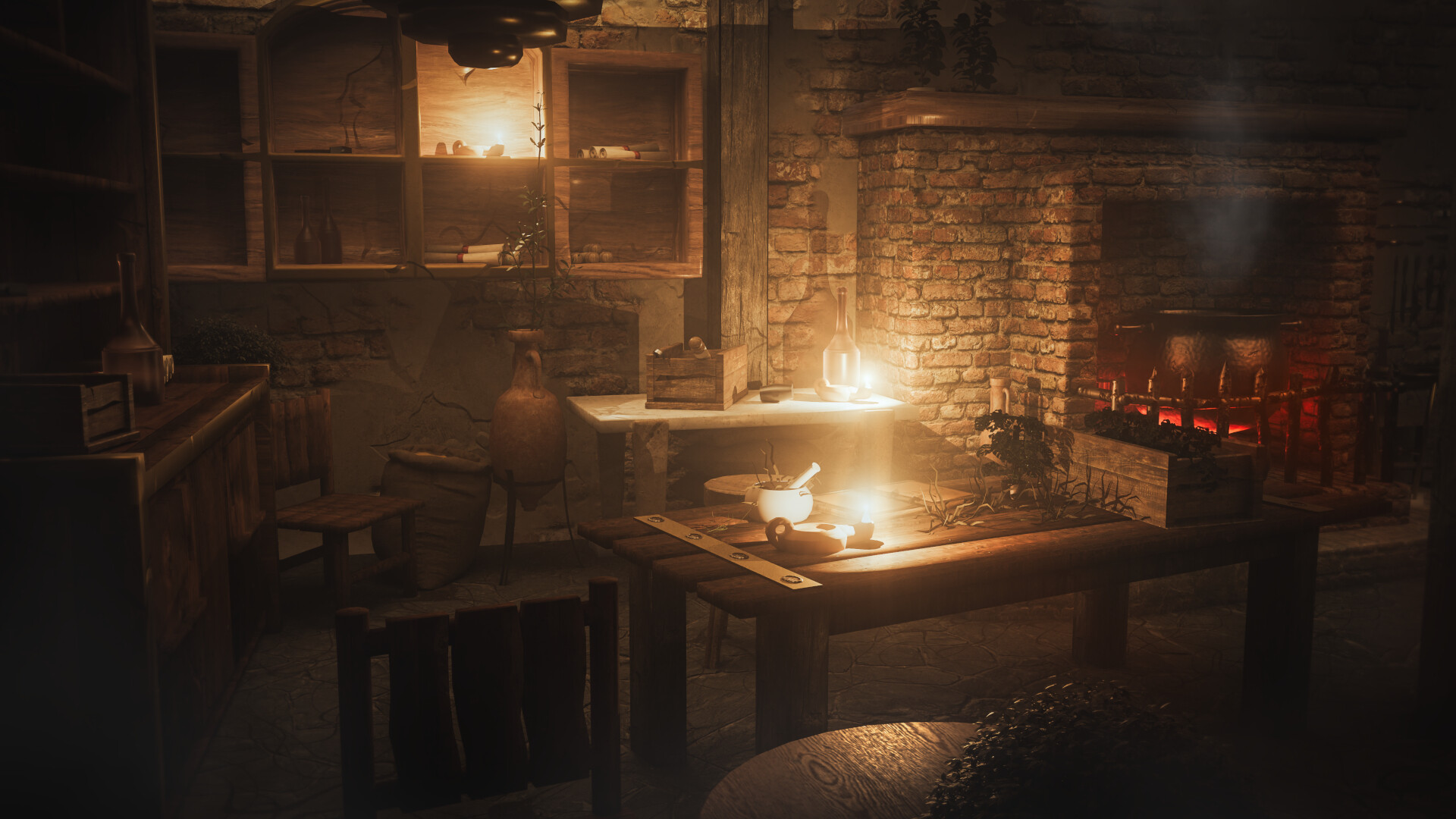
  • Refined interior props and assets (benches, lectus, taberna elements, and various interior prefabs).
  • Improved torch button art + UI positioning in-scene.

Local map improvements (Prologue)

  • Implemented a dedicated Domus local map and refined interior transition logic so UI elements clean up properly when changing areas.
  • Improved map marker flexibility and cleaned up unused assets.
Report

Rod of Asclepius: An Educational RPG - Dev Log #3

News / 05 November 2025

Dev Log #3 – Limitanei, The Frontier Soldiers of Late Rome

05-November-2025

Guardians of the Empire’s Edge

In the centuries after the glory of Augustus, the Roman army changed as the empire itself evolved. By the 4th century AD, the once-mighty legions had transformed into a flexible network of troops. Among them stood the Limitanei; the soldiers of the frontier.

Stationed along the empire’s rivers, deserts, and mountain passes, the Limitanei were not elite palace guards or rapid field forces. They were local defenders, farmers and soldiers at once, who lived near their posts and watched the frontiers day after day. In Pannonia and along the Rhine and Danube, they manned fortresses that still dot Europe’s landscape.

Life on the Edge

The Limitanei maintained a permanent presence at the empire’s borders; building walls, repairing towers, and repelling raids. They often served for decades in the same region, marrying locals and blending into frontier life.

While their pay was lower than that of the mobile comitatenses field armies, they received land, rations, and a degree of autonomy unknown to earlier legionaries.

Weapons and Armor in Late Antiquity

The equipment of the 4th–5th century soldier was practical, regional, and evolving:

  • Helmet: Ridge-type helmets, iron or bronze, sometimes silvered for officers.

  • Armor: Chain-mail and scale were common, worn over a tunic and padded vest.

  • Shield: Oval wooden shields, painted with unit insignia described in the Notitia Dignitatum.

  • Weapons:

    • Long thrusting spear, main weapon of the infantryman in late antiquity.

    • Long straight sword for close combat.

    • Lighter throwing spears.

    • Lead-weighted darts carried inside the shield, thrown before melee.

  • Clothing: Wool tunic, cloak, and sturdy closed boots, suited for all seasons of the frontier.

Legacy of the Limitanei

Though sometimes dismissed by ancient authors as second-rate troops, the Limitanei kept Rome’s frontiers secure for centuries after the empire’s political unity crumbled. Their forts, from the Rhine to the Danube, from Egypt to Syria, later became medieval strongholds and towns.

They were the quiet guardians of Rome’s fading light, the soldiers who stayed when others marched away.

References:

Vegetius, Epitoma Rei Militaris (c. 390–420 AD);
Bishop & Coulston, Roman Military Equipment: From the Punic Wars to the Fall of Rome (2006);
Notitia Dignitatum (c. 400 AD);
Archaeological finds (Archeological Museum Osijek).

Bringing History to Life

History is alive in Rod of Asclepius. Every shield, tunic, and spear is carefully reconstructed from archaeological evidence; then brought to life through animation and storytelling. The Limitanei you see here are not just static models, but living figures within the game’s world, recreated as part of an animated video sequence of Roman legionaries on the frontier.

The scene is presented through a dimetric camera, emphasizing spatial depth and composition. The legionaries themselves appear slightly stylized, with proportionally larger heads; a deliberate artistic choice that complements this perspective, giving a subtle chibi-like charm without losing historical authenticity. Through their presence, the past breathes again.

Play Rod of Asclepius Demo


Report

Rod of Asclepius: An Educational RPG - Dev Log #2

News / 29 October 2025

Dev Log #2 — Milestone: Demo Release

29-Oct-2025

From idea (Nov-2024) to a playable Demo in 11 months.

Snapshot: €48,200 in-kind time + €540 cash = €48,740 project value (to date).
In-kind = 2,000 h × €22 + 150 h × €28; all figures rounded for public sharing.

Why I’m Sharing This

I want a transparent, practical snapshot of what it took to reach a playable demo of Rod of Asclepius, a historically grounded RPG set in 4th-century Pannonia Secunda. If you’re an indie dev, a supporter, or simply curious, I hope this helps you benchmark scope and effort.

Funding (rounded)

Sources

  • Personal funds (Albert Gregl): €410

  • Community donations: €130

Spent so far (cash)

  • Art commissions: €175

  • Advertising / promo: €188

  • Steam Direct fee: €92

  • Tools / hosting / licenses: €85

Cash total spent: €540

I keep donor names private unless I have explicit consent to list/credit.

Time Invested

  • Solo development (Albert Gregl): ~2,000 h (design, code, art, research)

  • Volunteers (archaeology research, Latin, history, JP localization, voice actors): ~150 h

  • Commissioned artists: ~50 h

Total time: ~2,200 h

In-kind value (baseline estimate)

  • Solo time: 2,000 h Ă— €22 = €44,000

  • Volunteers: 150 h Ă— €28 = €4,200

In-kind total: €48,200
In-kind = non-cash value of donated/own time (hours × rate). It’s here for transparency — not payroll, invoices, or tax documentation.

What’s in the Demo

  • A vertical slice + Prologue chapter that showcases the core game loop: explore → diagnose → treat (turn-based, card-driven care).

  • A historically grounded setting in 4th-century.

What’s Next

  • Iterate on demo feedback.

  • Begin Chapter I pre-production.

  • Continue art pass, performance, and UX polish.

How You Can Help

Transparency Notes

  • Money figures are rounded for public sharing.

  • In-kind = hours Ă— baseline rates (a benchmarking estimate).

  • I only tag or name contributors with their consent.

  • This post is not payroll, an invoice, or a tax document.

Report